الاثنين، 27 يونيو 2016
Galaxy S7 / S7 Edge Vs iPhone 6s / 6s Plus [Comparison]
Choosing which smartphone to purchase and run with for the next 12/24 months is not as much of an easy choice as it once used to be. Companies are continually pushing the boundaries of what’s possible with mobile technology, which inadvertently makes it a lot more difficult when it comes to choice. Samsung and Apple are pioneers of that push, a focus that has resulted in the availability of the iPhone 6s and iPhone 6s Plus since September 2015, as well as the Galaxy S7 and Galaxy S7 Edge which made their debut at MWC 2016. But how do these devices compare in terms of technical specification when thrust together in a side-by-side comparison?
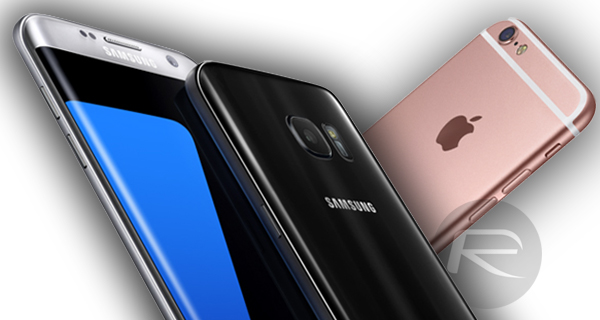 On paper though, you’d be forgiven for thinking that the Galaxy S7 and S7 Edge blows the iPhone 6s and 6s Plus away based on specifications alone, but there’s always more than that to consider. There’s the fact that Apple’s hardware and software have been optimized to perform seamlessly with one another, with the Cupertino-based company extracting every last ounce of performance out of that marriage. We’ve all seen
 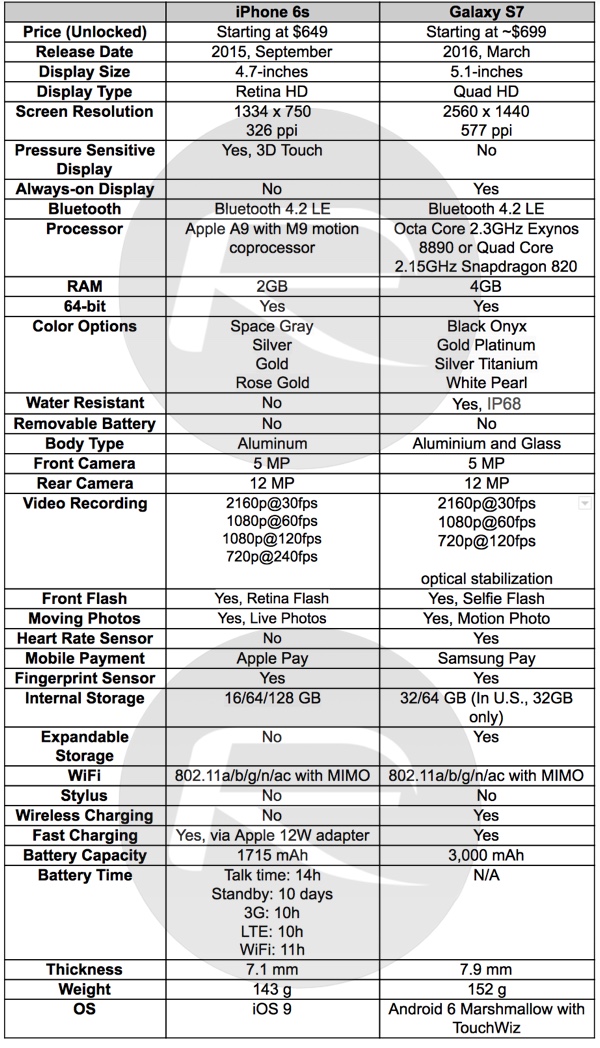 Samsung Galaxy S7 vs Apple iPhone 6s
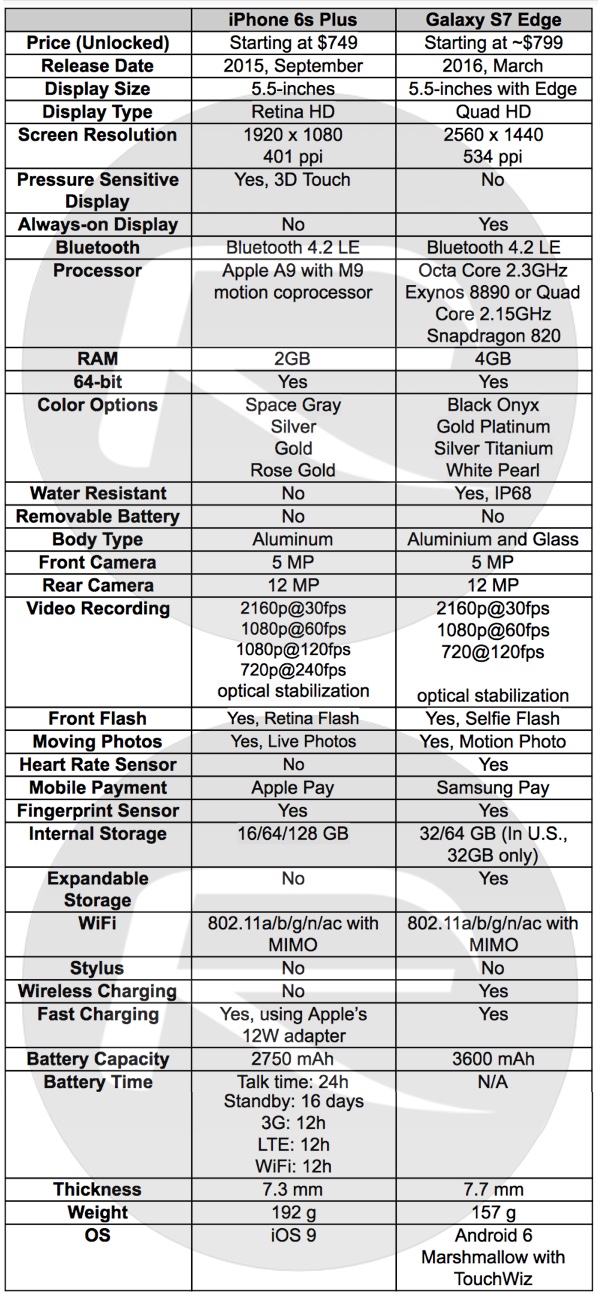 Samsung Galaxy S7 Edge vs Apple iPhone 6s PlusSamsung Galaxy S7 / S7
Review Sony Xperia X
Update: We now have the Sony Xperia X in our hands ready for our full review. Keep your eyes peeled to see our full verdict on Sony's latest flagship in the coming days.
The Sony Xperia X is a curious device. I say curious because I don't really know what kind of phone it is.
I could look at the CPU used, the screen size and resolution and the intended market - but based on what Sony's telling me, the first two points aren't really relevant and there's no information on which sort of buyer the Xperia X is aimed at.
It's very much a Sony phone though, stuffed to the brim with components from all departments in the company: screen tech from Bravia, audio from the Hi-Res Audio workers and the DSLR team working in tandem with the smartphone guys to make a compelling spec list.
-320-80.JPG)
But given we've been waiting for the Xperia Z6, the all new flagship, for ages it's hard to know if this is the new phone or just a side-range that sits alongside the Xperia Z choices - and given Sony doesn't seem to know the answer to this question - or just isn't telling me - it's hard to gauge.
What we do know now is that this phone is £459 in the UK (around $660 / AU$900), which is pretty expensive indeed - not quite flagship prices, but a lot more than I was expecting.
Check out our hands-on video review of the Sony Xperia X
Design
The Xperia X is a phone that, as shown by the spec list below, is dripping with Sony heritage. Coming with a 5-inch Full HD screen, it sits within the same industrial-style design that the previous handsets have used.
-320-80.JPG)
It's something of a shame really - and that's not to say there's anything wrong with what's been put together here. No, the front glass is strong and slightly curved at the sides, the back is all metal and the sides, while plastic, really fold into the chassis well.
No, it's a shame because this is meant to be a new chapter for Sony, and that was a chance to rip up what it's done before and start with a blank slate, a phone design that starts a new direction and maybe appeals to a new set of consumers.
-320-80.JPG)
There's still the same lozenge power button on the side, which doubles as the power key, and as the phone isn't water resistant this time around doesn't have extra flaps to cover the charging port, which lives at the bottom (and sadly isn't USB Type-C, which Sony tells me is just a timing issue from when it created the phone).
The smaller screen is still sharp and vivid and the 5-inch form factor slides into the hand pretty well, although it's not a patch on the beautiful edge-to-edge display of the Xperia XA, which is curiously cheaper than the more well-specified X.
-320-80.JPG)
The power under the hood comes from the new-but-mid-range Snapdragon 650 CPU from Qualcomm, and combined with 3GB RAM is a decent enough combination of battery-saving and grunt to run the phone.
That said, the Xperia X didn't like taking a lot of large (23MP) photos in a row, as it began to slow down rapidly after that. I'll give this a pass though, as I'm among the first in the world to get a hands on experience with this phone and it's very much early software - and camera speed optimisation is one of the first to improve.
-320-80.JPG)
The camera is clearly the big hitter on the Xperia X, the only part of the phone that's higher-spec than the previous Xperia Z5. It's the same 23MP camera, but with Predictive Hybrid autofocus.
What those overly complicated words mean is that the phone can go from sleep to tracking an object in space very, very quickly - the tests we did showing the camera could go from sleeping to taking a picture in 0.6 seconds were indeed proved true.
-320-80.JPG)
It doesn't mean you'll get a GREAT picture, as you're pretty much guessing at the framing of the shot, but it's a nifty ability if you're rushing to get a snap of your child pulling over the laundry bin or your dog doing something hound-like - you know, the usual stuff the human race is obsessed with.
There's still some tidying up to do on the camera, as some of my test shots weren't amazing - but then again, some were. Sony's attitude seems to be that it recognises what it's missed with the camera in the past, and is looking to make the phone more user-friendly to get great shots from without having to mess around with the professional settings.
-320-80.JPG)
The battery life on the Xperia X should also last longer - not just in terms of time between charges, but also the length of time before your battery becomes so awful that you need change your phone.
That's another way to get around the lack of removable battery that some smartphone fans still clamour for (although microSD card is supported).
-320-80.JPG)
The system works by constantly monitoring the charge going into the battery and then making sure the phone is completely removed from the charging while the wall outlet is still plugged in. I obviously couldn't test this yet, but a long time shooting with the phone for an afternoon didn't make anywhere near the dent in the battery performance that I was expecting.
There are some other decent features as well, from the smoother lock screen to the continued use of Hi-Res Audio. I don't understand why the brand has given up on water resistance, one of its key selling points, though.
-320-80.JPG)
The overall ethos of Sony's new Xperia X range is yet to be defined - after all, this isn't even the first X smartphone from Sony, as the Sony Ericsson Xperia X10 was actually the first to bear the moniker and was very much a flagship device (although it was NOT a great phone...) but it's hard to see who this is aimed at.
Early verdict
The Sony Xperia X is a phone that's just crying out for an identity to hold onto; a cheap price, a superb build quality, a stunning screen, and it has none of those things. At first glance it's a slightly different Xperia Z with lower spec.
-320-80.JPG)
But dig a little bit deeper and you'll see a phone that's wanted to come out and play for a while, but it couldn't because the other kids in school were having none of it. Then it grew up and got much better looking BECAUSE it was alternative, and suddenly the world was very much interested in what this handsome hunk of tech has to say.
The price of £459 in the UK is confusing, as it seems to suggest the Xperia X is going to be a flagship phone, one that's worthy of taking the Z's place at the head of the line.
-320-80.JPG)
The camera is great, the audio strong and the battery has potential - but I still think we should have seen a new design ethos from Sony when the new phones came out. Then again, I've been banging that drum for years - maybe it's time to admit this is just what Sony does to its phones.
Either way though, the Xperia X needs the 'why should I buy it?' answer when in your local phone shop choosing between the reams of options, and I can't think of anything amazing off the top of my head - just very good elements.
Review HTC 10
This time around, things were going to be different. For the all-new HTC 10 I was told that the brand took things back to basics, made the changes it needed to and focused heavily on making the phone useable and a pleasure to mess around with as before.
But does the HTC 10 impress? Is this the return to true innovation from a company that used to be unafraid to take risks, a reboot back to the winning ways?
Before we get into that, let's take a look at what the phone looks like on paper. It's got an all-metal body, thankfully doesn't go down the same iPhone-a-like design as the One A9 from 2015, and doesn't just stuff in tech for the sake of having a higher spec.
When it comes to price, you can pre-order your HTC 10 via the firm's website, with the SIM-free price set at US$699.99 (£569.99, around AU$900).
If you're lucky enough to live in the UK, get in there early and apply discount code 'HTC10' to get 10% off, giving you a price of £512.99.
-320-80.JPG)
It's got the new Qualcomm Snapdragon 820 chipset, loads of RAM, a much more refined camera and – with contract pricing starting at around £38/US$23/AU$75 per month – it's going to be competitively positioned, coming in similar to or in some cases a shade below the Samsung and Apple prices. So, that sounds all great, right?
Key features
One of the most irksome features of the HTC One M9 was…well, there weren't really any features to talk about. The same BoomSound speakers were back, firing audio forwards into your face, and the camera was just a 20MP effort that took some okay pictures; not terrible, but nothing you'd tell your friends about down the local watering hole.
In fact, it was just the design that made it worth checking out at all, that combined with HTC's special sauce.
This year, thankfully, there's a lot more to talk about, starting with the efforts made to improve how the phone feels to use. It's got a much lower latency compared to the earlier models, which means the response under the finger is a lot more impressive.
In fact, the constant chat in our briefing about the phone was about 'tuning', that HTC had gone further than any other brand in making the HTC 10 a phone that will impress the second you glide a finger across the screen.
Let's drop out for a second and talk about the name: it's not the HTC One M10, but simply the HTC 10. Apparently, this represents the best ever, the top of the pile, the maximum score you can get in gymnastics.
To me, that sounds like this is HTC's last ever phone. But you can bet there'll be some 'turn it up to 11' tag lines next year when the HTC 11 pops up.
-320-80.JPG)
Anyway, back to the 10. The screen is also upgraded from the previous model, using Super LCD 5 and boosting the pixel count to QHD resolution, offering 564 pixels per inch, to push up the sharpness significantly.
The camera is dropped in terms of the megapixel count, down to 12MP with a 4:3 resolution (sound at all similar to any other top-end phones on the market?). HTC tells me this is something actually requested by photographers, and given it's put such a big effort into making the camera as good as it could be, it's believable that HTC would listen to them.
The 10 has also been given the best DxO Mark on the market of 88, which HTC says means it's claimed the crown of 'best camera in a smartphone'. It doesn't at all – that title was previously held by Sony and the Xperia Z5, and there's no way those were the best cameras on the market by any stretch of the imagination.
The camera, which supposedly has blink-and-you'll-miss-it autofocus thanks to the second-generation laser autofocus on offer, also comes with 4K video recording combined with 24-bit sound, so you'll get professional-grade videos when you're out at a gig and completely missing the chance to enjoy the artist you paid so much to see.
-320-80.JPG)
Talking of the audio, that's the other area HTC's been putting a big effort into. The two front-facing speakers, which looked so iconic on the front of the recent One range, are gone, with two speakers now firing out the high end and bass tones separately.
They also point in different directions, but despite having separate amplifiers they work in concert to, it's claimed, give amazing sound without headphones (spoiler alert: they don't).
The headphone element is important though, as HTC has taken the bold step of not only making the HTC 10 Hi-Res Audio Certified, but has also bundled in some high-end headphones with the handset, so everyone has access to the improved tones.
These aren't cheap to make, so it's good to see HTC taking a hit on its margins to give something back to its users. You seeing this, Tim?
And a special word for the interface, which HTC is bragging quite heavily about – and it's anything but heavy. The brand has worked with Google to 'reboot Android' and make something cleaner, more easy to use and upgrade, ridding the phone of pointless duplicated apps in the process.
The aim is for the project to eventually find something that all brands will use, leading to an end of the skins that sit atop LG, Samsung and Sony phones despite them all using the same base software. Will that happen? Would it be a good thing for HTC? Who knows – but it's good that someone's trying.

الاشتراك في:
التعليقات (Atom)